 CAD
CAD
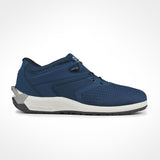
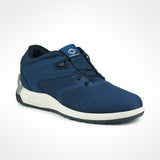


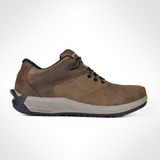
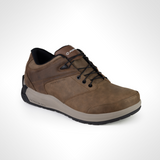


When your feet hurt, or when you need orthotics, you often end up asking your podiatrist or orthotist the same question: which shoe should I wear?
It's a good question, and the answer is simpler than you'd think. Foot-care professionals aren't looking for the trendy shoe. They look at a few specific criteria, always the same ones, that make a shoe genuinely help rather than get in the way of comfort.
Here they are, and why they matter.
What a podiatrist or orthotist actually looks at
Many patients ask their podiatrist which shoe to choose. The criteria that come up most often are concrete: good support for the foot, cushioning that absorbs shock, a stable sole, enough room at the front of the foot, and the ability to fit an orthotic inside.
Comfort too, of course. But comfort that lasts all day, not only at the moment you try the shoe on. A shoe recommended by an orthotist is, first and foremost, a shoe that checks these boxes. Colour and style come after.

Room for the orthotic: the criterion that rules out most shoes
This is often the first obstacle. Many shoes have a glued-in insole that can't be removed. The result: the orthotic doesn't fit, or it lifts the foot out of the shoe and ruins the comfort.
Our models solve this. The insole is removable: simply take it out and replace it with your orthotic. About 80% of the orthotics on the market fit our Medium models, while approximately 95% fit our Wide models. The foot stays properly positioned, and the comfort and support of the orthotic are preserved throughout the day.

Slipping on without bending down: a real everyday comfort issue
For a professional, a shoe that's hard to put on isn't a small detail. It's sometimes what keeps a patient from wearing it properly, or from wearing it at all.
Bending down to tie laces can be uncomfortable, even painful, with arthritis in the hands, a sensitive back, or reduced mobility. And straining your balance to put shoes on while standing is never ideal.
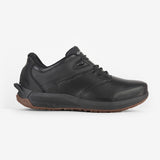
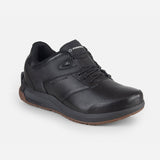
This is where the Powerlace self-lacing mechanism makes real sense. Your foot goes in, your body weight triggers the system, and a real lace tightens around your foot. To take the shoe off, a discreet lever at the back is all it takes: a light press, lift your leg, and it's done. No need to bend down, tie a knot, or strain. The movement stays simple and comfortable, even on days when your body cooperates a little less.
Support and comfort that last
One point professionals often stress: support. A foot that shifts inside the shoe tires faster and holds an orthotic less well.
The Powerlace mechanism tightens the foot with a real lace, not an elastic, precisely and completely. That's what provides consistent support, and therefore comfort that lasts all day. Add good cushioning and a natural rubber sole, and you get a comfortable shoe that stays that way over time. We tested it in the lab over 10,000 cycles before selling a single pair, roughly seven years at four uses a day. Designed and manufactured in Quebec, backed by a one-year warranty.
Every foot is different, and your podiatrist or orthotist is best placed to assess your situation. But if you're looking for a shoe that checks the right boxes (support, comfort, room for the orthotic, and easy on and off), it's worth showing it to them.

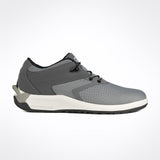
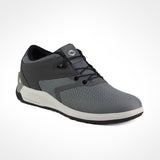
Looking for a comfortable shoe that fits your orthotics? Discover the Powerlace models in leather and in textile, available in regular and wide widths, designed in Quebec.
FAQ: Shoes and foot health
Which shoe does a podiatrist or orthotist usually recommend?
The criteria that come up most often are good support for the foot, cushioning that absorbs shock, a stable sole, enough room at the front of the foot, and the ability to fit an orthotic inside. Comfort matters, but comfort that lasts all day. Since every situation is different, your professional is best placed to advise you.
Can you put orthotics in Powerlace shoes?
Yes. The insole is removable: simply take it out and replace it with your orthotic. About 80% of the orthotics on the market fit our Medium models, while approximately 95% fit our Wide models. This helps keep the foot properly positioned while preserving the comfort and support of the orthotic throughout the day.
Are Powerlace shoes suitable for arthritis or reduced mobility?
The self-lacing mechanism lets you put the shoe on and take it off without bending down, tying laces, or straining your balance, which helps when getting dressed becomes difficult. For any specific condition, it's best to discuss it with your podiatrist or orthotist.